It can be incredibly frustrating when you discover that your uPVC door won't lock properly. This isn't just an inconvenience; it can be a significant security concern for your home in Waterlooville, Hampshire. Understanding the potential reasons behind this common issue is the first step towards finding a lasting solution, ensuring your peace of mind and the safety of your property. We know how vital a secure and fully functional door is to every homeowner.
📞 Get in touch: call 07879472986 or email alancatterall4@gmail.com.
Understanding Why Your uPVC Door Won’t Lock Properly
When your uPVC door won't lock properly, it usually points to a mechanical issue rather than a fundamental design flaw. Modern uPVC doors are engineered for durability and security, incorporating multi-point locking systems that engage at several points along the door frame. These systems are robust, but like any mechanical component, they can experience wear and tear or become misaligned over time. Identifying the precise cause is key to effective repair.
The multi-point locking mechanism is a complex system involving various moving parts, including hooks, bolts, and rollers, all actuated by the turning of a key or handle. If any part of this intricate system is out of sync, damaged, or obstructed, it can prevent the door from engaging fully with the frame, leaving you wondering why your uPVC door won't lock properly. This can manifest as difficulty turning the key, the handle feeling loose, or the door simply not latching securely.
Common Culprits: Why Your uPVC Door Won’t Lock Properly
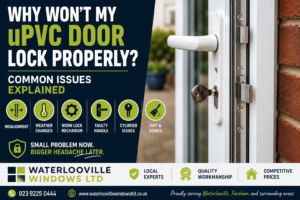
Several factors can contribute to a uPVC door failing to lock correctly. Pinpointing the exact reason can be challenging without a keen eye, but understanding the usual suspects helps. We've seen these issues countless times across Waterlooville and the surrounding Hampshire areas, making us well-versed in diagnosing and resolving them.
- Door Misalignment: This is perhaps the most frequent cause. Over time, due to changes in temperature, ground movement, or simply continuous use, the door sash can drop or shift slightly within its frame. Even a small misalignment can prevent the locking points from engaging with their keeps.
- Worn or Damaged Locking Mechanism: The internal components of the multi-point lock can wear down. Springs might weaken, gears might strip, or individual bolts might become stiff or bent.
- Faulty Cylinder: The cylinder is where you insert your key. If it's old, damaged, or of poor quality, it might not properly actuate the locking mechanism. Sometimes, the key itself can be the problem if it's bent or worn.
- Hinge Problems: Worn or loose hinges can cause the door to sag, leading to misalignment. If the hinges aren't holding the door correctly, the locking mechanism won't line up.
- Obstructed Keeps: The keeps are the metal plates on the door frame where the locking bolts engage. If these are filled with debris, bent, or have shifted, they will prevent the lock from fully securing.
Misalignment: A Frequent Problem
Misalignment stands out as a primary reason why your uPVC door won't lock properly. When a uPVC door drops or shifts, even by a few millimetres, the locking points on the door sash no longer align perfectly with the corresponding keeps on the frame. This prevents the bolts, hooks, or rollers from entering their slots cleanly. You might find yourself having to lift or push the door into position just to get it to lock, or perhaps it won't lock at all without significant force.
This issue is often exacerbated by seasonal changes. In warmer weather, uPVC can expand slightly, and in colder weather, it can contract. These subtle movements, over years, can lead to the door settling into a misaligned position. For residents across Waterlooville, maintaining proper door alignment is crucial for both security and thermal efficiency, as a misaligned door can also let in draughts.
Worn or Damaged Locking Mechanisms
Beyond misalignment, the internal workings of the multi-point locking system are a common point of failure. These mechanisms are designed to be robust, but constant daily use will eventually take its toll. Over many years, individual components within the gearbox, such as the springs, levers, or cogs, can become worn, seized, or even break. This internal damage often explains why your uPVC door won't lock properly, even if the door itself seems perfectly aligned.
When the mechanism is failing, you might notice that the handle feels loose, becomes stiff, or doesn't return to its horizontal position correctly. The key might turn, but the bolts don't extend, or they only extend partially. In some cases, the mechanism might seize completely, leaving the door either permanently locked or unlocked. These are clear indicators that the internal components need professional attention, often requiring a replacement of the gearbox or the entire multi-point strip.
Issues with the Cylinder or Key
The cylinder, also known as the barrel, is the part of the lock where you insert your key. If there's an issue here, it can directly impact why your uPVC door won't lock properly. A worn-out cylinder might not engage the multi-point mechanism fully, or it might become stiff and difficult to turn. Sometimes, the problem isn't the door itself, but the key you're using. A bent or heavily worn key can struggle to operate the cylinder pins correctly, leading to locking difficulties.
If you find that the key turns but doesn't operate the mechanism, or if the key gets stuck, the cylinder is a prime suspect. Upgrading to a high-security cylinder, such as an anti-snap, anti-pick, anti-drill, and anti-bump model, can not only resolve locking issues but also significantly enhance your door's security. This is a popular and sensible upgrade for many homeowners in Waterlooville looking to bolster their home security.
How can I check for uPVC door misalignment?
You can perform a simple visual check to see if your uPVC door is misaligned. Close the door gently and observe the gaps around the door sash where it meets the frame. These gaps should be even all the way around. If you notice wider gaps at the top or bottom, or if the door rubs against the frame at any point, it's a strong indication of misalignment. You can also try to lift the door handle when the door is open; if the multi-point locking bolts don't extend smoothly, it suggests a problem with the alignment or the mechanism itself.
Ready to find out more? — get in touch via our contact page.
Temporary Solutions and When to Call for Help
When your uPVC door won't lock properly, it's natural to want to try a quick fix. While some minor issues might be temporarily addressed, it's crucial to understand when to call in the professionals. Attempting complex repairs without the right tools or knowledge can often worsen the problem, potentially leading to more costly damage.
Here’s a comparison of common approaches:
| Feature | Temporary DIY Fixes | Professional Intervention |
|---|---|---|
| Ease | Relatively easy for very minor issues (lubrication) | Requires specialist tools and expertise |
| Effectiveness | May provide short-term relief, rarely a permanent solution | Resolves underlying issues, offers lasting results |
| Durability | Limited, problem likely to recur | High, restores full functionality and security |
| Suitability | Minor stiffness, simple cleaning of keeps | Misalignment, broken mechanisms, cylinder replacement, hinge repair |
| Security | May compromise security if not fully resolved | Ensures optimal security and peace of mind |
For minor stiffness, you might try lubricating the locking mechanism with a silicone-based spray. Avoid oil-based lubricants as they can attract dirt and worsen the issue over time. Cleaning the keeps on the frame to remove any debris can also help if an obstruction is preventing the bolts from engaging. However, if these simple steps don't resolve why your uPVC door won't lock properly, or if the problem recurs, it's a clear sign that professional help is needed.
Why Professional Expertise Matters for Your uPVC Door
When your uPVC door won't lock properly, especially if it’s a security concern, relying on professional expertise from Waterlooville Windows is paramount. We understand the specific construction and intricate mechanisms of uPVC doors, and we have the diagnostic tools and experience to accurately identify the root cause of the problem. Often, what appears to be a simple issue can mask a more complex underlying fault within the multi-point locking system or the door's structural integrity.
Our team has extensive experience serving homes throughout Waterlooville, Horndean, Denmead, and the wider Hampshire area. We see a wide variety of uPVC door issues every week, from slight misalignments to completely seized mechanisms. We carry a comprehensive range of quality replacement parts, ensuring that any repairs are carried out efficiently and effectively, restoring full functionality and security to your home. We pride ourselves on offering reliable, long-lasting solutions, not just quick fixes.
How to Prevent Your uPVC Door from Locking Issues
Prevention is always better than cure, especially when it comes to the security of your home. Taking a few proactive steps can significantly reduce the chances of your uPVC door not locking properly in the future. Regular, simple maintenance can extend the lifespan of your door's locking mechanism and ensure smooth operation for many years.
Here are some key preventative measures:
- Regular Cleaning: Keep the door frame and the visible parts of the locking mechanism clean from dirt, dust, and debris. This prevents build-up that can hinder smooth operation.
- Lubrication: Periodically apply a silicone-based lubricant to the moving parts of the multi-point locking mechanism, including the hinges and the cylinder. Do this every 6-12 months.
- Check for Alignment: Occasionally close your door slowly and check that the locking points align smoothly with the keeps on the frame. If you notice any rubbing or difficulty in closing, address it promptly.
- Gentle Operation: Avoid slamming your uPVC door. Gentle closing and opening reduce stress on the hinges and the locking mechanism, preventing premature wear and tear.
- Professional Servicing: Consider having your uPVC doors professionally serviced every few years. Just like a car, a professional check-up can identify potential issues before they become major problems, ensuring your uPVC door won't lock properly.
Have a specific question? Email us via our contact page.
Frequently Asked Questions
What should I do if my uPVC door is locked shut and won't open?
If your uPVC door is locked shut and won't open, avoid forcing it, as this can cause further damage to the mechanism or frame. The problem is likely a seized multi-point locking mechanism or a faulty cylinder. Your best course of action is to contact a professional locksmith or a uPVC door specialist immediately. They have the expertise and tools to open the door without causing unnecessary damage and can then diagnose and repair the underlying issue.
Can I repair a uPVC door locking mechanism myself?
While it might be tempting to attempt a DIY repair, multi-point locking mechanisms are complex and require specialist knowledge and tools. Incorrect repairs can lead to further damage, invalidate warranties, and compromise your home's security. For any issues beyond simple lubrication or cleaning, it is highly recommended to call a professional. They can correctly diagnose why your uPVC door won't lock properly and carry out a safe and effective repair.
How much does it cost to fix a uPVC door that won't lock properly?
The cost to fix a uPVC door that won't lock properly varies significantly depending on the specific problem. A simple adjustment for misalignment will be less costly than replacing a full multi-point locking mechanism or a high-security cylinder. We recommend getting a professional assessment to receive an accurate quote tailored to your specific situation. We prioritise transparent pricing after a thorough diagnosis.
How long does a uPVC door locking mechanism typically last?
A well-maintained uPVC door locking mechanism can last for many years, often between 10 to 20 years or even longer. However, its lifespan can be affected by factors such as the quality of the original mechanism, frequency of use, exposure to harsh weather conditions, and how regularly it is maintained and lubricated. Regular servicing can help extend its life and prevent issues where your uPVC door won't lock properly.
What is an anti-snap cylinder, and do I need one?
An anti-snap cylinder is a type of high-security lock cylinder designed to resist common burglary techniques like 'lock snapping'. Lock snapping is a method where burglars apply force to break the cylinder, gaining access to your door's locking mechanism. Upgrading to an anti-snap cylinder significantly enhances your door's security, making it much harder for intruders to force entry. We highly recommend them for all uPVC doors, especially in areas like Waterlooville where home security is a priority.
Experiencing problems with your uPVC door not locking properly can be a real headache, impacting your home's security and your peace of mind. At Waterlooville Windows, we specialise in diagnosing and resolving all types of uPVC door issues, from simple adjustments to full mechanism replacements. Our experienced team is dedicated to providing reliable, efficient, and professional services to homeowners throughout Waterlooville, Hampshire, and the surrounding areas. Don't let a faulty lock compromise your security any longer.
📞 Ready to get started? Call 07879472986 or email alancatterall4@gmail.com.
Find Out More
Explore more of what we do:
Elsewhere: